Pet First Aid Guide What Every Dog and Cat Owner Must Know

Pet First Aid Essentials- What Every Pet Owner Need to Know

Introduction: “It happened so fast…”

Imagine this: you’re in the living room, half-watching TV, when suddenly your dog starts gagging. He paws at his mouth. His eyes go wide. Or maybe your cat leaps off the sofa, collapses, and begins twitching.

In those moments, panic is a totally human reaction. Many loving pet parents freeze—not because they don’t care, but because they don’t know what to do right now. And when every second counts, even basic pet first aid knowledge can make the difference between stabilising your pet… or losing precious time.

Here’s the good news: you can be prepared. You don’t need to be a vet, and you don’t need fancy equipment. What you do need is calm, clear, step-by-step guidance you can rely on when emotions are running high.

This guide is updated for 2027, reflecting rising pet ownership, more indoor pets, remote working, and common modern household risks—from heatwaves and travel stress to medications, cleaners, and children’s toys. You’ll learn first aid for pets at home, how to act during the most common dog and cat emergencies, and how to build a practical pet emergency kit you can actually use.

Important reminder: First aid bridges the gap until professional veterinary care. It does not replace it.

By the end, you’ll feel more confident, more capable, and far less helpless if the unexpected happens. Let’s get you ready.


Critical Disclaimer – Please Read First

Pet first aid is temporary emergency care only.

After any first aid intervention, contact your vet or an emergency animal clinic immediately.

Key safety rules you must follow:

  • Injured or frightened pets may bite or scratch, even if they’ve never done so before
  • Use safe restraint and protect yourself
  • Never give human medications to pets
  • Do NOT induce vomiting, use hydrogen peroxide, or give activated charcoal unless a vet specifically tells you to
  • If in doubt, do less and call for help

Authoritative bodies like American Veterinary Medical Association (AVMA) stress that first aid is only meant to stabilise—not cure—your pet.

Learn veterinary nursing, canine CPR, and emergency care skills to support animals in clinical and home settings.

4.6
Rated 4.6 out of 5

(8 ratings) · 47 already enrolled · Beginner level

Duration: 11 hours

Learn at your own pace

Skills You Will Build:

Canine CPR, pet first aid, bandaging, wound care, emergency handling, basic vet care

Pet First Aid Kit Essentials: What Every Home Should Have

A well-stocked pet first aid kit saves time, reduces panic, and helps you act quickly. You can buy a pre-made kit or build your own—both work if you know what’s inside.

Wound Care Items

These help with bleeding dog first aid, cuts, and minor injuries:

  • Sterile gauze pads & non-stick dressings – absorb blood safely
  • Self-adhesive bandage wrap – sticks to itself, not fur
  • Saline solution – flush wounds or eyes (never tap water if avoidable)
  • Antiseptic wipes (pet-safe) – clean surrounding skin
  • Clean towels – pressure, warmth, restraint

Restraint & Safety Tools

Protect yourself while helping your pet:

  • Soft muzzle or roll gauze – for dogs only (never muzzle a vomiting or breathing-distressed dog)
  • Thick blanket – wrap cats or injured pets gently
  • Gloves – hygiene and bite protection

Meds & Supplies (Vet-Approved Only)

  • Digital thermometer (rectal, pet-use)
  • Lubricant (for thermometer use)
  • Tick remover
  • Ice packs (instant or freezer-ready)
  • Notebook with vet numbers

Travel & Disaster Extras

  • Collapsible water bowl
  • Bottled water
  • Copies of vaccination records
  • Spare leash or carrier
  • Your pet’s photo (in case of separation)

Tip: Keep one kit at home and a smaller version in your car.
Idea: Create a printable checklist and tape it inside the kit lid.

Master dog behaviour, obedience training, and consultation skills for a rewarding canine career.

4.9
Rated 4.6 out of 5

(6 ratings) · 542 already enrolled · Beginner level

Duration: 5 hours+

Learn at your own pace

Skills You Will Build:

Dog training, behaviour correction, client consultation, separation anxiety solutions

Step-by-Step First Aid for Common Dog & Cat Emergencies

This is the heart of first aid for pets at home—clear, calm actions you can take immediately.

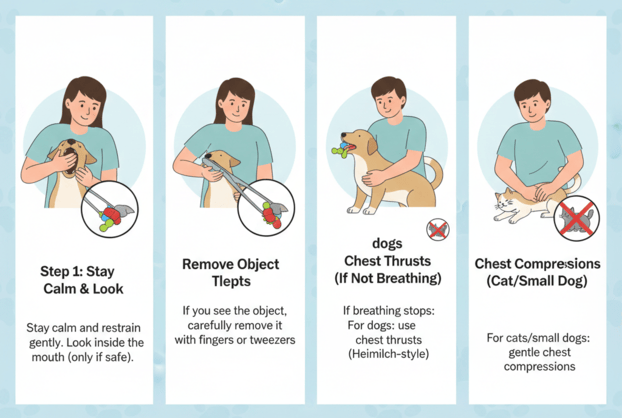
Illustrated step-by-step guide showing pet choking first aid, including checking the mouth, removing objects, chest thrusts for dogs, and chest compressions for cats and small dogs.

What to Do If Your Dog or Cat Is Choking?

Choking is one of the most searched emergencies for a reason.

Signs of Choking

  • Pawing at mouth
  • Gagging or coughing
  • Difficulty breathing
  • Blue or pale gums
  • Collapse

Step-by-Step: What to Do

  • Stay calm and restrain gently
  • Look inside the mouth (only if safe)
  • If you see an object, carefully remove it with fingers or tweezers
  • If breathing stops:
    • For dogs: use chest thrusts (Heimlich-style)
    • For cats/small dogs: gentle chest compressions
  • Seek emergency vet care immediately

Bleeding, Cuts & Wounds

Immediate Actions

  • Apply direct pressure with clean gauze
  • Elevate the limb if possible
  • Wrap snugly—not tightly
  • Keep pet calm and still

Important Notes

  • Severe bleeding = emergency
  • Tourniquets should only be used briefly and as a last resort
  • Watch for swelling or soaked bandages

Learn pet grooming, bathing, clipping, and canine care techniques for a successful grooming career.

4.7
Rated 4.6 out of 5

(8 ratings) · 1316 already enrolled · Beginner level

Duration: 6 hours+

Learn at your own pace

Skills You Will Build:

Dog grooming, bathing, clipping, coat care, breed styling, pet hygiene

Dog Heatstroke Treatment & Overheating

Heatstroke cases are rising every year.

Warning Signs

  • Heavy panting
  • Drooling
  • Vomiting
  • Weakness or collapse

What to Do

  • Move to shade or cool area
  • Apply cool (not icy) water to paws, belly, and neck
  • Use a fan if available
  • Offer small sips of water
  • Go to the vet immediately

Never immerse in ice water—it can cause shock.

Master pet sitting, dog walking, and emergency care to build a trusted pet service business.

4.9
Rated 4.6 out of 5

(9 ratings) · 640 already enrolled · Beginner level

Duration: 6 hours+

Learn at your own pace

Skills You Will Build:

Pet care, dog walking, emergency response, pet nutrition, business setup, marketing

Pet Poisoning First Aid

Common toxins include medications, cleaning products, plants, chocolate, and pesticides.

If You Suspect Poisoning:

  • Remove access to the toxin
  • Do NOT induce vomiting
  • Call your vet or pet poison helpline immediately
  • Bring packaging with you

This applies to pet poisoning first aid for both dogs and cats.

Learn BARF feeding and raw diet techniques to improve canine nutrition and health naturally.

4.9
Rated 4.6 out of 5

(5 ratings) · 500 already enrolled · Beginner level

Duration: 3 hours

Learn at your own pace

Skills You Will Build:

Raw feeding, BARF diet, canine nutrition, meal planning, pet health improvement

What Should You Do If Your Cat Has a Seizure?

Seizures look frightening—but your calm matters.

During the Seizure

  • Do not touch the mouth
  • Clear nearby objects
  • Dim lights and reduce noise
  • Time the seizure

After

  • Keep your cat warm and quiet
  • Contact your vet, especially if it lasts over 2 minutes

Searches like “cat seizure what to do” spike every year—for good reason.

Gain skills in animal care, hygiene, and first aid to support a wide range of domestic and exotic pets.

4.8
Rated 4.6 out of 5

(5 ratings) · 770 already enrolled · Beginner level

Duration: 6 hours

Learn at your own pace

Skills You Will Build:

Animal care, hygiene, first aid, exotic pet care, zoonotic disease awareness

Fractures, Limping & Suspected Broken Bones

First Aid Steps

  • Restrict movement
  • Support the limb with a towel or bandage
  • Do not try to realign bones
  • Transport carefully to the vet

Learn to rescue, treat, and care for injured wildlife with safety and disease control skills.

4.8
Rated 4.6 out of 5

(6 ratings) · 53 already enrolled · Beginner level

Duration: 3 hours+

Learn at your own pace

Skills You Will Build:

Wildlife rescue, animal handling, injury care, disease control, safety procedures

Illustrated emergency guide showing basic CPR for dogs and cats, including airway positioning, 30 chest compressions at 100–120 BPM, and 2 rescue breaths.

Basic Dog & Cat CPR (Emergency Only)

If your pet is unconscious and not breathing:

Dog CPR at Home (Simplified)

  • Lay dog on side
  • Check airway
  • 30 chest compressions
  • 2 rescue breaths
  • Repeat and seek help immediately

Cats & Small Dogs

  • Faster, gentler compressions
  • Smaller breaths

CPR success depends heavily on proper training.
For confidence and certification, explore our CPD-accredited Pet First Aid & CPR Level 3 course.

Master stable management, horse health, and safety to begin a career in professional equine care.

5
Rated 5 out of 5

(5 ratings) · 391 already enrolled · Beginner level

Duration: 2 hours

Learn at your own pace

Skills You Will Build:

Horse care, stable management, equine health, feeding, disease control, yard safety

Broader Pet Emergency Preparedness Tips

Preparedness saves lives.

  • Store emergency vet numbers in your phone
  • Know your nearest 24/7 clinic
  • Have a pet sitter emergency plan
  • Refresh your kit every 6 months
  • Take formal training—skills fade without practice

Trusted organisations like the Red Cross also emphasise readiness and education as key lifesaving tools.

Develop animal welfare, health, and nutrition skills to start a career ensuring animal wellbeing.

5
Rated 5 out of 5

(105 ratings) · 1147 already enrolled · Beginner level

Duration: 5 hours+

Learn at your own pace

Skills You Will Build:

Animal welfare, pet nutrition, hygiene, first aid, multi-species care, health checks

Final Thoughts: Confidence Is the Real First Aid

If you’ve read this far, take a breath—you’re already a better-prepared pet parent than most.

Emergencies will always be stressful. But knowledge replaces panic with purpose. Knowing what to do in those first critical minutes gives your dog or cat their best possible chance.

If you want deeper confidence, recognised certification, and step-by-step training you can rely on, explore our CPD-accredited Pet First Aid courses at The Animal Care. They’re designed for pet owners, aspiring professionals, and anyone who wants to protect the animals they love.

Knowledge is the best first aid. Start today.

Start Your
Animal Career Today

a girl happily posing with a dog

Recent Posts

January 30, 2026

0 responses on "Pet First Aid Guide What Every Dog and Cat Owner Must Know"

Leave a Message

Your email address will not be published. Required fields are marked *

top