Trauma Informed Practice Overview

Trauma can shape how people think, behave, trust and ask for help. Trauma-informed practice doesn’t treat trauma. It changes how services respond, so the people they support feel safe and aren’t hurt again by the very help they seek.

This course explores how trauma affects the mind, body and relationships, and how to recognise it in the people you support. You will learn how to build trust, work within safeguarding and ethical boundaries, and adapt your approach across different settings and communities.

It also looks at the practitioner. You will examine how this work affects your own wellbeing, what organisations can do to support trauma-informed practice, and how reflection turns knowledge into everyday habits. It suits anyone supporting people who have experienced trauma, in any health, care, education or community role.

Learning Outcomes

By the end of this course, you will be able to:

  • Explain what trauma-informed practice is and why it matters.

  • Describe how trauma affects psychological, emotional and physical wellbeing.

  • Recognise the signs of trauma in behaviour, communication and engagement.

  • Understand why trauma responses are often misread as “difficult” behaviour.

  • Apply approaches that build trust, safety and a sense of control.

  • Explain your safeguarding, ethical and legal responsibilities in the UK.

  • Adapt trauma-informed practice to different settings and diverse communities.

  • Identify the effects of trauma-related work on practitioner wellbeing.

  • Describe how organisations can support trauma-informed practice.

  • Reflect on your own practice and apply learning to real situations.

Course Media

Assesment

After completing all the modules of the Trauma-Informed Practice training, your learning will be assessed by an automated multiple-choice question exam. You can participate in the Mock Exam prior to commencing the course completion Final Exam.

Who is this Trauma Informed Practice Course for?

What You’ll Gain from Trauma Informed Practice Course

Helping, Not Treating

Understand what trauma-informed practice is, and what it isn’t. Shift from asking “What’s wrong with this person?” to “What does this person need?”, guided by principles such as safety, trust, choice, collaboration, empowerment and cultural consideration.

What Trauma Does to the Mind and Body

Explore how trauma can affect emotions, memory, behaviour and physical health, and why reactions that seem puzzling often make sense in context.

Reading Trauma Responses

Learn to spot withdrawal, anger, avoidance, hypervigilance and other responses for what they often are: ways of coping, not defiance.

Trust That Lasts

Discover how consistency, clear communication, choice and predictability help people feel safe, and how everyday actions can unintentionally trigger distress.

Safeguarding, Ethics and the Law

Know your duties around safeguarding, confidentiality, professional boundaries and UK legal responsibilities, and how to act when trauma disclosure meets duty to report.

Practice That Fits the Setting

Adapt your approach to different services and communities, recognising how culture, identity and context shape how trauma is experienced and expressed.

Protecting Your Own Wellbeing

Recognise the emotional toll of working with trauma and learn how to protect your wellbeing, so you can keep supporting others sustainably.

Organisations That Help, Not Harm

See how policies, environments, supervision and leadership can make a whole service trauma-informed, not just individual practitioners.

Reflection Into Action

Use reflective practice to test your assumptions, learn from real situations and turn understanding into consistent, confident practice.

Why Should You Choose this Course

Most people who use health, care, education and justice services have a history that shapes how they engage. Practitioners who understand trauma respond with curiosity instead of judgement, and that can change whether someone stays involved with support or disengages.

This course joins theory and practice. You’ll learn the psychology of trauma, then apply it to trust-building, safeguarding decisions, different settings and organisational culture. A dedicated focus on practitioner wellbeing and reflective practice sets it apart, because compassion is hard to sustain without care for yourself.

Study online, on any device, at your own pace. Check your understanding with the Mock Exam, then earn a free accredited certificate on completion.

Requirements

No previous experience or formal qualifications are required to enrol in this course. You can access the course from any kind of e-device, allowing you to study anytime and anywhere at your own pace.

Career Path

  • Mental Health Support Worker Supports people with mental health needs under the guidance of clinical staff. The role does not involve providing treatment.
    Salary: £18,000 – £30,000 per year

  • Domestic Abuse Support Worker Provides practical and emotional support to survivors, often in refuge or community settings. Many services describe their approach as trauma-informed.
    Salary: £25,000 – £32,000 per year

  • Family Support Worker Offers early help and ongoing support to families, working alongside schools, health teams and children’s services.
    Salary: £26,000 – £37,000 per year

  • Youth Worker Supports young people aged 11 to 25 with their personal, social and educational development.
    Salary: £22,000 – £35,000 per year

  • Probation Services Officer Works with people before and after sentence, where understanding the role of trauma can inform how relationships and risk are managed.
    Salary: £26,000 – £32,000 per year 

  • Social Worker Protects and supports children, adults and families. Practising requires an approved social work qualification and professional registration, but this course provides relevant background knowledge.
    Salary: £32,000 – £48,000 per year 

Course Curriculum

Module 01: Foundations of Trauma-Informed Practice
Module 01: Foundations of Trauma-Informed Practice 00:20:00
Module 02: The Psychology and Impact of Trauma
Module 02: The Psychology and Impact of Trauma 00:20:00
Module 03: Recognising Trauma and Building Trust
Module 03: Recognising Trauma and Building Trust 00:20:00
Module 04: Safeguarding, Ethics and UK Legal Responsibilities
Module 04: Safeguarding, Ethics and UK Legal Responsibilities 00:20:00
Module 05: Trauma-Informed Practice Across Diverse Settings
Module 05: Trauma-Informed Practice Across Diverse Settings 00:20:00
Module 06: Practitioner Wellbeing and Organisational Practice
Module 06: Practitioner Wellbeing and Organisational Practice 00:20:00
Module 07: Advanced Application and Reflective Practice
Module 07: Advanced Application and Reflective Practice 00:20:00

Certification

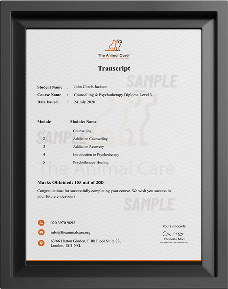
Once you’ve successfully completed this course, you can obtain the Digital (PDF) Certificate for only £4.99. Also, you can have your printed certificate delivered by post for only £9.99 (FREE POSTAGE). With these affordable pricing on certificates, we’re also offering the PDF Transcript for £2.99.

Also, you can have your printed transcript delivered by post for only £7.99 (FREE POSTAGE). All of our courses are fully accredited, providing you with up-to-date skills and knowledge and helping you to become more competent and effective in your chosen field. Our certifications have no expiry dates, although we do recommend that you renew them every 12 months.

Reviews

Write your review

Share your feedback and help create a better experience for everyone.

Renee W. Johnston

Jan 24, 2025

The final assessment is done today. theanimalcare.org is a useful site. Highly appreciating the exceptional content.

Susan J. Kalinowski

Feb 05, 2025

I found the courses very informative so far. A care is the first platform I am writing a review for. To the newbies- before taking an online course try to gather some info about the provider, a professional platform with top accreditation will be a good choice.

Charles A. Fischer

Jan 24, 2025

Simply amazing. Took few courses during my vacation and all were good. Online courses save time and money.

Frequently Asked Questions


Yes. Experiencing several adverse childhood experiences does not determine someone’s future health, relationships or achievements. Supportive relationships, positive environments, access to appropriate services and opportunities to develop resilience can help reduce the impact of childhood adversity. An ACE score indicates exposure to certain experiences, not a person’s potential, abilities or future outcomes.


No. Although research links adverse childhood experiences with an increased risk of certain mental and physical health difficulties, an ACE score cannot reliably predict an individual’s future. Two people with the same score may have very different experiences and outcomes. Factors such as the nature of the adversity, its duration, individual circumstances and protective relationships also matter.


Yes. Safe relationships, supportive caregivers, positive friendships, stable environments and trusted adults can help children develop resilience when facing adversity. These protective experiences can support emotional development, a sense of belonging and healthy coping skills. Recognising protective factors is therefore just as important as identifying the risks associated with adverse childhood experiences.


Not automatically. Asking about past adversity requires sensitivity, appropriate training, clear safeguarding procedures and access to suitable support if someone becomes distressed or discloses abuse. UK evidence reviews have also highlighted insufficient evidence to recommend universal ACE screening programmes. Professionals should therefore consider the purpose of asking, the individual’s circumstances and whether meaningful support is available.


Yes. Traditional ACE questionnaires cover a defined range of experiences, including abuse, neglect and household difficulties, but they do not capture every form of childhood adversity. Experiences such as homelessness, poverty, bullying, community violence and discrimination may also affect a child’s emotional wellbeing and development. Professionals should consider the wider circumstances of a child’s life rather than relying solely on an ACE checklist or numerical score.

Quick Pay
Trauma-Informed Practice
Original price was: £299.Current price is: £24.99. ex Vat

Save Upto 95% - Ends Soon!

Offer Ends in

  • validity Access
    01 Year
  • level Level
    Intermediate
  • schedule Students
    0
  • schedule Duration
    2 hours, 20 minutes
Use Coupon: ALL39
£11 /Unit Price
£110
Quantity:

Buying more than one of the same courses?

  • 45% discount for orders of 10+ courses
  • 55% discount for orders of 50+ courses
  • 65% discount for orders of 100+ courses

Looking for a more personalised package?

contact us now
top