
Course Overview

Diploma in Animal Psychology Level 3 helps you understand why pets behave as they do, improving welfare, preventing issues, and strengthening bonds. This CPD-accredited course gives you a solid theoretical foundation for applying psychology in real-world animal care and behaviour roles.This Level 3 course introduces Animal Psychology concepts, covering dogs, cats, and rabbits. It shows how behaviour interconnects across species, giving you the tools to interpret actions and support better outcomes. Ideal for aspiring professionals, career changers, and pet owners seeking advanced understanding.You’ll move beyond guesswork and start recognising the subtle signals that tell you exactly how your animal is feeling, what they need, and how best to support them. It’s the kind of understanding that transforms everyday interactions into stronger bonds and opens genuine opportunities in animal care.

Learning Outcomes

Course Media

Assesment

After completing all the modules of the course, your learning will be assessed by an automated multiple choice question exam. You can participate in the Mock Exam prior to commence the course completion Final Exam.

Who is this for?

Every pet owner, aide and professional working with animals should have a solid understanding of animal psychology. For animal lovers who are interested in exploring the basics of veterinary medicine and anyone involved in working with animals in any of the many jobs in the animal care industry, this course is a must. ​

Why Should You Choose this Course
from Animal Care

At The Animal Care, we’re committed to helping you become more confident, capable, and informed—whether you’re a pet owner or aspiring to work with animals professionally. Our courses are crafted by experts and cover everything from pet behaviour and nutrition to grooming and first aid.

What sets us apart? You’ll receive CPD-accredited certification at no extra cost, along with lifetime access to all your learning materials. This means you can study at your own pace, revisit content anytime, and gain recognised credentials without added fees.

Thousands of learners trust The Animal Care for reliable, up-to-date, and easy-to-follow training that fits into real life. Whether you’re caring for your own dog or cat, or preparing to start a career in animal care, we provide the knowledge and confidence you need to do it well.

Requirements

No previous experience is required to enrol in this course. You can access the course from any kind of e-device anytime, anywhere.

Career Path

  • Animal Care Assistant (Shelters, Kennels, Rescues)
    Caring for animals while observing and supporting their psychological welfare.
    Salary: £16,000 – £21,000/year

  • Pet Sitter / Dog Walker with Behaviour Insight
    Offering home visits and walks with added awareness of animal emotional needs and behaviours.
    Salary: £12,000 – £25,000/year (or £10–£20/hour, self-employed)

  • Kennel / Cattery Carer with Psychology Knowledge
    Reducing stress and managing animals more effectively through an understanding of their psychology.
    Salary: £16,000 – £22,000/year

  • Behaviour Assistant / Trainee Animal Behaviourist
    Supporting qualified behaviourists to implement behavioural modification programmes.
    Salary: £19,000 – £25,000/year

  • Animal Trainer (Dogs, Cats, Horses, or Exotics)
    Using psychological principles to train animals for obedience, therapy, or performance.
    Salary: £22,000 – £35,000/year (employed)
    Self-employed trainers can earn £30,000 – £50,000+/year.

  • Animal Behaviourist / Consultant
    Diagnosing and treating behavioural issues in pets, horses, or exotics.
    Salary: £28,000 – £40,000/year (employed)
    Self-employed consultants can earn £40,000 – £60,000+/year.

  • Senior Behaviourist / Specialist Clinic Owner
    Running your own consultancy or behavioural practice, managing staff and clients.
    Salary: £45,000 – £70,000+/year

  • Animal Psychology Lecturer / Educator
    Teaching animal psychology and behaviour to students or professionals.
    Salary: £28,000 – £45,000/year

  • Animal Welfare Advisor (Charities / Councils)
    Advising on policies, welfare standards, and practices informed by animal psychology.
    Salary: £25,000 – £35,000/year

Course Curriculum

Introduction
About the Course 00:03:00
Introduction to Animal Psychology 00:05:00
The Evolution of Pets 00:07:00
Exercise Lesson 1 00:03:00
Psychology of Dog Behaviour
Dealing with Dogs 00:07:00
Behaviour in Dogs 00:08:00
Psychology of Dogs 00:07:00
Aggression in Dogs 00:10:00
Exercise Lesson 2 00:03:00
Psychology of Cat Behaviour
Dealing with Cats 00:06:00
Behaviour in Cats 00:07:00
Aggression and Cats 00:07:00
Psychology of Cats 00:06:00
Exercise Lesson 3 00:04:00
Psychology of Rabbit Behaviour
About Rabbits 00:06:00
Behaviour of Rabbits 00:06:00
Exercise Lesson 4 00:02:00
Final Conclusions
Final Test Preparation 00:02:00
Thank you and Good bye 00:04:00
Mock Exam
Mock Exam – Diploma in Animal Psychology Level 3 00:20:00
Final Exam
Final Exam – Diploma in Animal Psychology Level 3 00:20:00
Order Your Certificate
Order Your Certificate 00:00:00

Certification

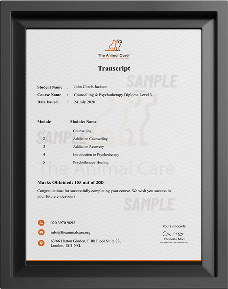
Once you’ve successfully completed this course, you can obtain the Digital (PDF) Certificate for only £4.99. Also, you can have your printed certificate delivered by post for only £9.99 (FREE POSTAGE). With these affordable pricing on certificates, we’re also offering the PDF Transcript for £2.99.

Also, you can have your printed transcript delivered by post for only £7.99 (FREE POSTAGE). All of our courses are fully accredited, providing you with up-to-date skills and knowledge and helping you to become more competent and effective in your chosen field. Our certifications have no expiry dates, although we do recommend that you renew them every 12 months.

Reviews

Write your review

Share your feedback and help create a better experience for everyone.

Renee W. Johnston

Jan 24, 2025

The final assessment is done today. theanimalcare.org is a useful site. Highly appreciating the exceptional content.

Susan J. Kalinowski

Feb 05, 2025

I found the courses very informative so far. A care is the first platform I am writing a review for. To the newbies- before taking an online course try to gather some info about the provider, a professional platform with top accreditation will be a good choice.

Charles A. Fischer

Jan 24, 2025

Simply amazing. Took few courses during my vacation and all were good. Online courses save time and money.

Frequently Asked Questions


Yes. Experiencing several adverse childhood experiences does not determine someone’s future health, relationships or achievements. Supportive relationships, positive environments, access to appropriate services and opportunities to develop resilience can help reduce the impact of childhood adversity. An ACE score indicates exposure to certain experiences, not a person’s potential, abilities or future outcomes.


No. Although research links adverse childhood experiences with an increased risk of certain mental and physical health difficulties, an ACE score cannot reliably predict an individual’s future. Two people with the same score may have very different experiences and outcomes. Factors such as the nature of the adversity, its duration, individual circumstances and protective relationships also matter.


Yes. Safe relationships, supportive caregivers, positive friendships, stable environments and trusted adults can help children develop resilience when facing adversity. These protective experiences can support emotional development, a sense of belonging and healthy coping skills. Recognising protective factors is therefore just as important as identifying the risks associated with adverse childhood experiences.


Not automatically. Asking about past adversity requires sensitivity, appropriate training, clear safeguarding procedures and access to suitable support if someone becomes distressed or discloses abuse. UK evidence reviews have also highlighted insufficient evidence to recommend universal ACE screening programmes. Professionals should therefore consider the purpose of asking, the individual’s circumstances and whether meaningful support is available.


Yes. Traditional ACE questionnaires cover a defined range of experiences, including abuse, neglect and household difficulties, but they do not capture every form of childhood adversity. Experiences such as homelessness, poverty, bullying, community violence and discrimination may also affect a child’s emotional wellbeing and development. Professionals should consider the wider circumstances of a child’s life rather than relying solely on an ACE checklist or numerical score.

Quick Pay
Diploma in Animal Psychology Level 3
Original price was: £299.Current price is: £24.99. ex Vat

Save Upto 95% - Ends Soon!

Offer Ends in

  • validity Access
    01 Year
  • level Level
    Level 3
  • schedule Students
    531
  • schedule Duration
    2 hours, 23 minutes
Use Coupon: ALL39
£11 /Unit Price
£110
Quantity:

Buying more than one of the same courses?

  • 45% discount for orders of 10+ courses
  • 55% discount for orders of 50+ courses
  • 65% discount for orders of 100+ courses

Looking for a more personalised package?

contact us now
top